Elite Home Staging
Preparing an established staging firm for its next chapter, aligning its brand, website and marketing with the full capabilities and value of the business.
DELIVERY
services delivered for this project
Strategy
Identity
Collateral
Web Design
Web Dev
Management
CMS
SEO
UX/UI
Aligning an established staging firm’s brand with its next chapter.
Elite Home Staging had built an experienced, operationally capable business with a clear commercial direction. Its brand needed to communicate the full value of that business and give the people representing it a consistent way to carry that direction forward.
What was changing
EHS was preparing for its next chapter.
The business had spent two decades developing its staging expertise, delivery capability and relationships across South Florida. Its offer combined buyer-aware design, fast installation and market-ready photography.
Yet its brand and marketing presented only part of that capability.
Different audiences encountered much the same broad story. The services did not always have a clear relationship, valuable evidence was underused and the website relied heavily on finished photography to explain the business.
The visual identity, sales materials, social content and enquiry systems had also developed in separate pieces.
The task was to connect those parts around the firm’s existing commercial direction, amplifying its reputation and making its value easier to understand.
That gap showed up in several places:
- The positioning was too broad. EHS appeared to be another home staging provider, with little explanation of the commercial thinking behind its work.
- Four audiences saw much the same website. Realtors, property investors, developers and homeowners each had different pressures and reasons for choosing a staging partner. The marketing made little allowance for those differences.
- The services felt separate. Staging, photography, leasing, design and developer work lacked a clear structure that people could understand quickly.
- The visual identity had become difficult to use. The logo lacked clarity at certain sizes and the wider system was inconsistent across the website, social media, uniforms, print and vehicles.
- The website left too much work to the photography. It showed attractive rooms but said very little about EHS's judgement, process or value. The routes towards an enquiry were equally limited.
- Enquiries were difficult to track. Website forms, internal follow-up, campaign sources and analytics were disconnected.
- Content depended too heavily on individuals. The growing team had no shared process for collecting, approving, publishing and resharing work.
- Marketing had no reliable centre. Search, paid advertising, landing pages, reviews, social content and offline campaigns had nowhere central to lead.
EHS was already growing. Our job was to give that growth a stronger structure and make the quality of the business easier to see.
Establishing the role of the brand
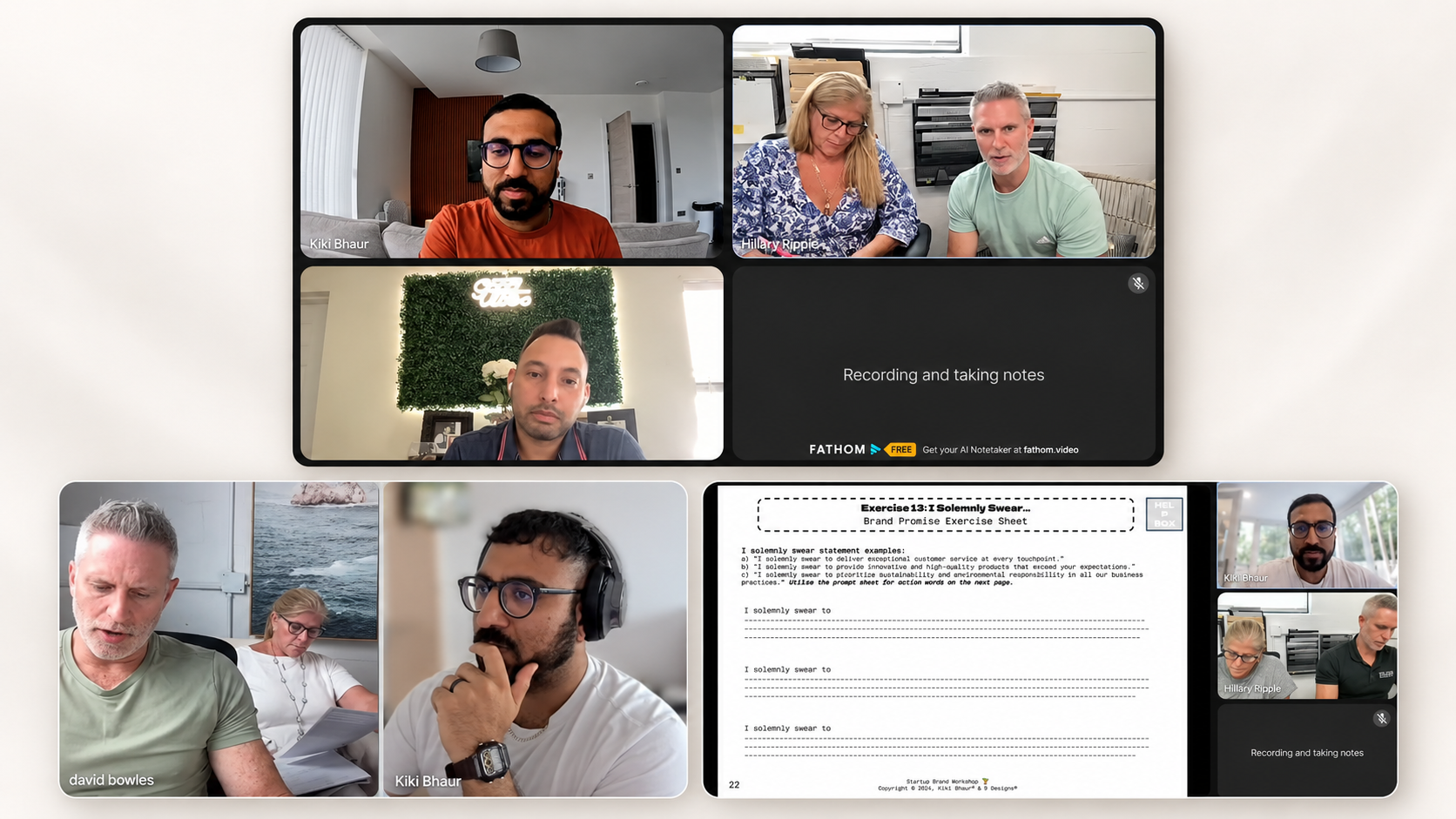
We began with leadership conversations, strategy workshops and a review of the existing business, market and customer experience.
The work examined how EHS created value, which audiences it needed to reach and what those audiences needed to believe before choosing a staging partner.
We reviewed competitors, the service offer, existing communication and the routes people followed towards an enquiry.
The strategy also needed to address how the brand would be used internally. Leadership, sales, social support and external partners needed a shared basis for making decisions.
The direction developed through three drafts, each reviewed with the leadership team and considered against how EHS sold and delivered its work.
The final Brand Strategy Guide and action plan became practical references for the identity, website, copy, sales materials and marketing that followed.
The work centred on a set of practical questions:
- What should Elite Home Staging be known for?
- Why should somebody choose EHS?
- Which audiences offer the greatest opportunity for growth?
- What does each audience need to know before requesting a quote?
- Which facts and results carry the most weight?
- How can the brand feel premium while remaining warm and accessible?
- What needs to stay consistent when the brand is handled by different people and partners?
- How should staging, photography, leasing, design and future services fit together?
The strategy took three complete drafts. Each round was reviewed with the leadership team and tested against the way EHS sells and delivers its work. The final version became a live Brand Strategy Guide and a practical action plan. Both guided the identity, website, copy, collateral, social content and marketing that followed.
Strategic Approach to making the value behind the furniture clear
We established a position around EHS as a premium property presentation partner.
This gave the firm a clearer way to explain the judgement, coordination and commercial purpose behind the finished rooms.
The proposition connected creative quality with operational performance. EHS understood how a property needed to present to its likely buyer and had the capability to prepare it efficiently.
The brand personality reflected the people behind the business. It needed to feel sophisticated and assured while remaining approachable, warm and practical.
That balance informed the language, visual direction and way the service was explained.
The strategic direction focused on five ideas.
1. Repositioning the business
We positioned EHS as a premium property presentation partner, giving the team a clearer way to talk about the value behind the furniture. Their work helps a property make a strong first impression, reach the market sooner and give buyers a reason to remember it.
The brand also had to feel like the people behind it. The EHS team described the right balance as soft-spoken yet impactful, stylish, approachable, classic and timeless. One phrase from the workshops captured it particularly well: staying on trend without becoming trendy.
2. The brand promise: Speed. Look. Price.
We brought the proposition into a memorable structure built around Speed, Look and Price.
This structure gave sales conversations, website copy and marketing materials a common explanation of the EHS offer.
The customer-facing idea, “Where homes meet their best first impression”, connected the emotional effect of presentation with the practical purpose of staging.
- Speed. EHS is set up to move quickly, from the first quote and consultation through to installation and photography. Ninety-five per cent of homes are staged in a single day.
- Look. Every scheme responds to the property, its likely buyer and the feeling the listing needs to create. Market-ready photography then carries that impression into the sale.
- Price. Staging is presented as a sound commercial investment. Clients receive premium care and one coordinated service, saving them the time and expense of managing several suppliers.
These three points gave the sales team and the new website a simple, consistent explanation of the EHS offer.
3. A mission and central idea
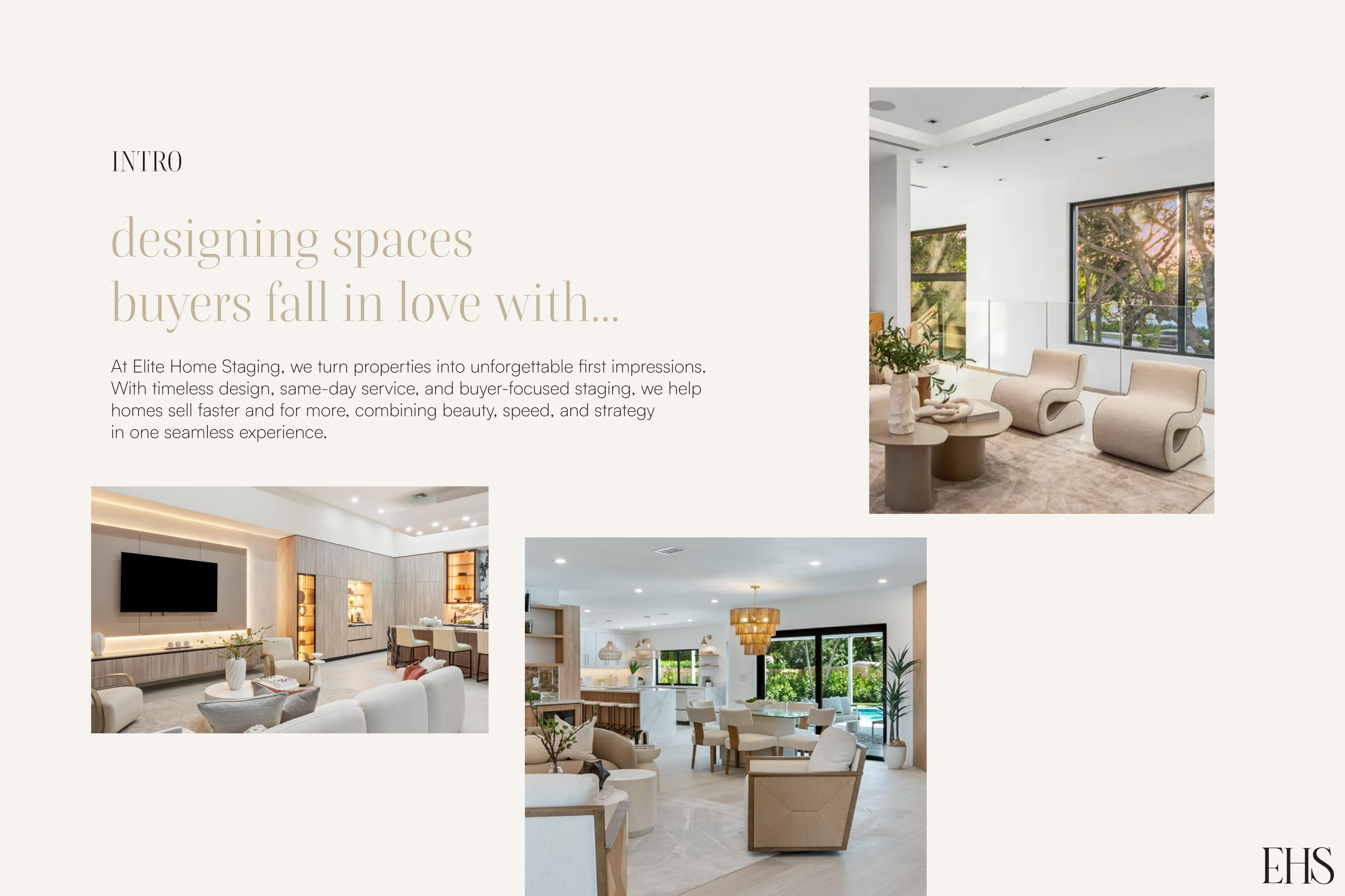
"To turn every property into an unforgettable first impression through strategic, emotional and high-impact staging that drives faster sales and stronger offers."
Where homes meet their best first impression.
The idea ran through the brand and website, joining the emotional appeal of a well-presented home with the commercial purpose of staging.
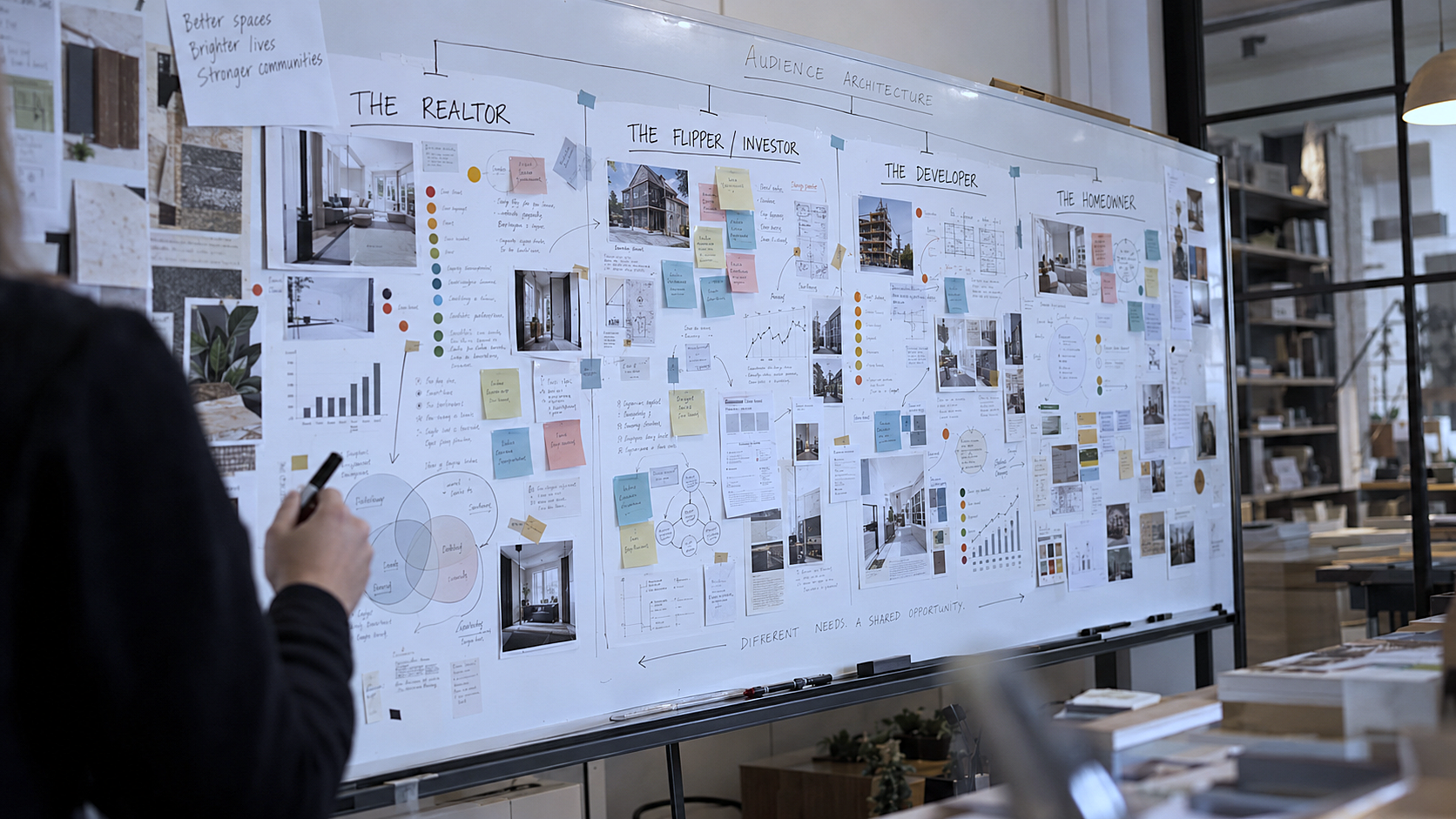
4. Audience architecture
We built the strategy around four decision-makers and the circumstances each one faces:
- The Realtor needs a reliable partner who can protect the listing schedule, reduce coordination and prepare the property quickly. Speed, communication, professionalism and market-ready photography carry the most weight.
- The Flipper or Investor is watching time, margin and return. Staging should raise the perceived value of the renovation without holding up the sale.
- The Developer needs a consistent standard across model homes, new builds or several units. Each scheme has to express the development vision and speak to the intended buyer.
- The Homeowner may be selling for the first time and feeling overwhelmed. Clear advice, reassurance and a straightforward process matter most.
These distinctions shaped the sitemap, landing pages, supporting evidence, calls to action, sales language and content priorities.
The same EHS brand could now introduce itself through an explanation relevant to each audience.
5. Recognising the need for education
The strategic work also considered people who understood their property-presentation problem without yet identifying staging as the solution.
The communication needed to connect their circumstances with the service available.
This influenced the way the website and educational content explained staging, its practical role and the reasons to involve a professional partner.
The photography remained important evidence, supported by clearer language about the process and value of the work.
6. Organising the offer for its current and future role
We structured the offer around vacant home staging, occupied home staging, investor and flip staging, rental staging, and model home and multi-unit staging for developers.
Market-ready photography was presented as a connected part of the service.
The wider architecture also allowed room for related design and leasing opportunities and future offers, while preserving the strength of the core EHS name.
This helped separate the different applications of the firm’s expertise without making the overall proposition harder to understand.
Execution
Stage 1: Giving the direction a usable visual identity
We treated the identity as a working system with jobs to do across web, print, social media, uniforms, vehicles and large-format production.
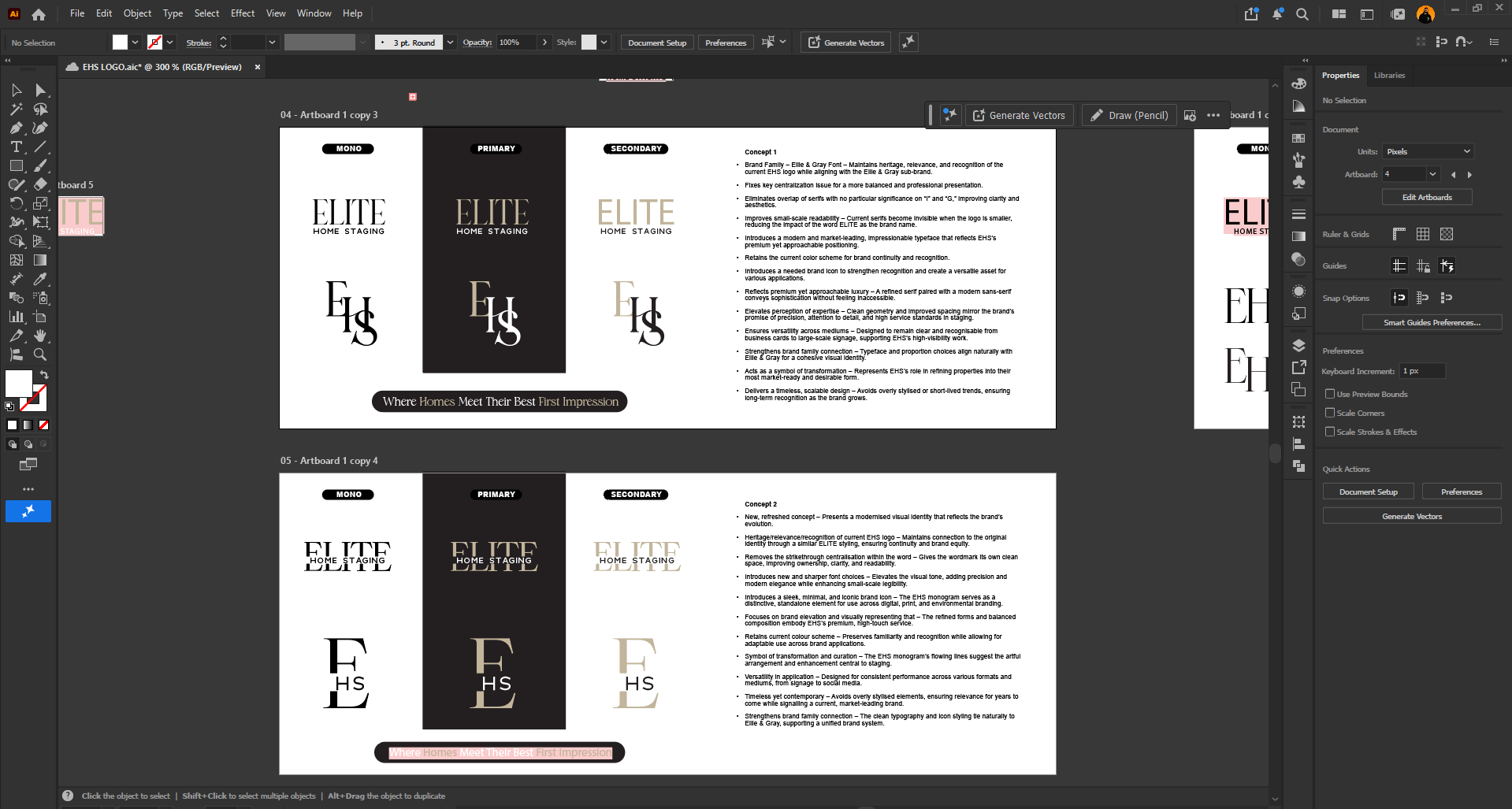
The previous logo had problems with clarity, alignment, flexibility and reproduction. We explored several new concepts alongside a refined version of the existing direction. The EHS team chose a new route, describing it as clean, sophisticated, timeless, premium and versatile. It felt distinctive while preserving enough familiarity for existing clients.
The finished suite covered the primary Elite Home Staging logo, secondary arrangements, a simplified EHS monogram and a tagline lock-up. We supplied full-colour and monochrome artwork, light and dark versions, small and large-format variants, a 20-year seal, and clear rules for sizing and spacing. Every file was prepared for digital, print and production use.
Stage 2: Colour, typography and photography
The core palette combined Onyx, Classic Taupe and Ivory Stone, giving the brand a warm, restrained architectural character. Supporting colours provided room for campaign variation without losing recognition.
We paired Boska’s editorial character with Satoshi’s practical clarity. The typography system distinguished expressive headlines from navigation, forms and service information.
Photography guidance covered wide room views, details, team portraits and before-and-after comparisons. It established expectations for tone, composition and image quality.
As more people contributed content, an approval process helped maintain that standard across the website, brochure and social channels.

Stage 3: A website shaped around customer decisions
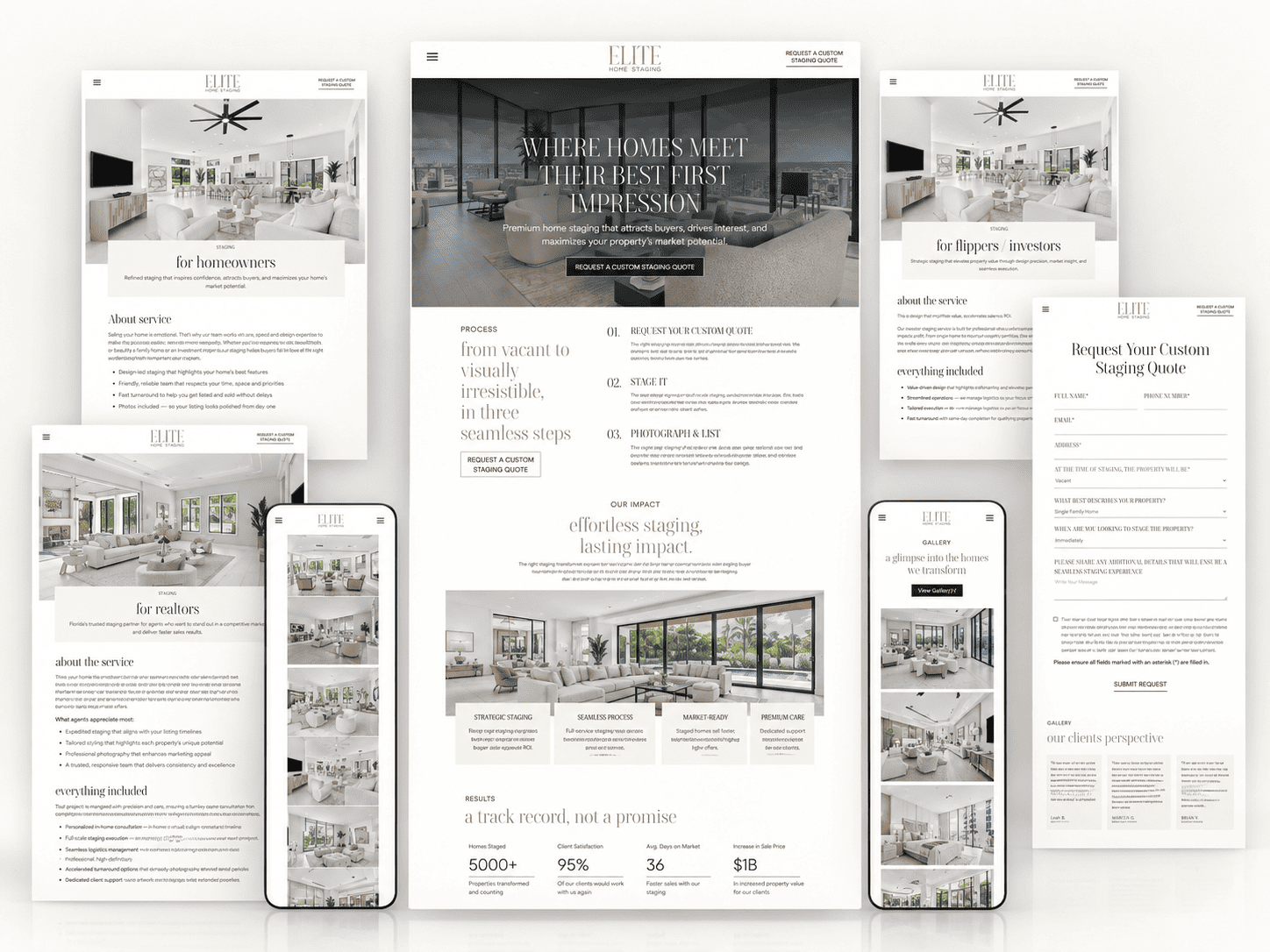
The website brought the audience strategy and service structure into the experience of exploring EHS.
Separate journeys helped realtors, investors, developers and homeowners find relevant information.
The copy introduced the service through their circumstances, then explained the process and presented appropriate evidence.
Existing proof became more prominent, including more than 5,000 homes staged, two decades of experience, market-ready photography and the firm’s reported delivery capability.
We also made the coordinated process easier to understand, from requesting a custom quote through staging and photography.
“Request a Custom Staging Quote” became the consistent main action. Supporting language explained the purpose of the deliverables, including the role of market-ready photographs.
The work covered website strategy, information architecture, UX, UI, copy, visual direction and Webflow development.
Reusable components and a manageable CMS supported future updates. Responsive development, form testing, quality assurance and launch coordination connected the finished design with its day-to-day use.
The new website launched in November 2025.

Stage 4: Connecting quote requests with the sales workflow
Working with an automation partner, we connected the quote journey with EHS’s existing operational systems.
Custom quote submissions passed through the connected workflow into Monday.com, with relevant source information and team notifications.
General enquiries followed a separate route, helping distinguish sales opportunities from other correspondence.
We tested the form and follow-up process together so the website handed the team usable information.
Measurement connected website activity, campaign links, telephone enquiries and CRM records, providing a clearer view of where an opportunity began.
Stage 5: Making offline activity measurable
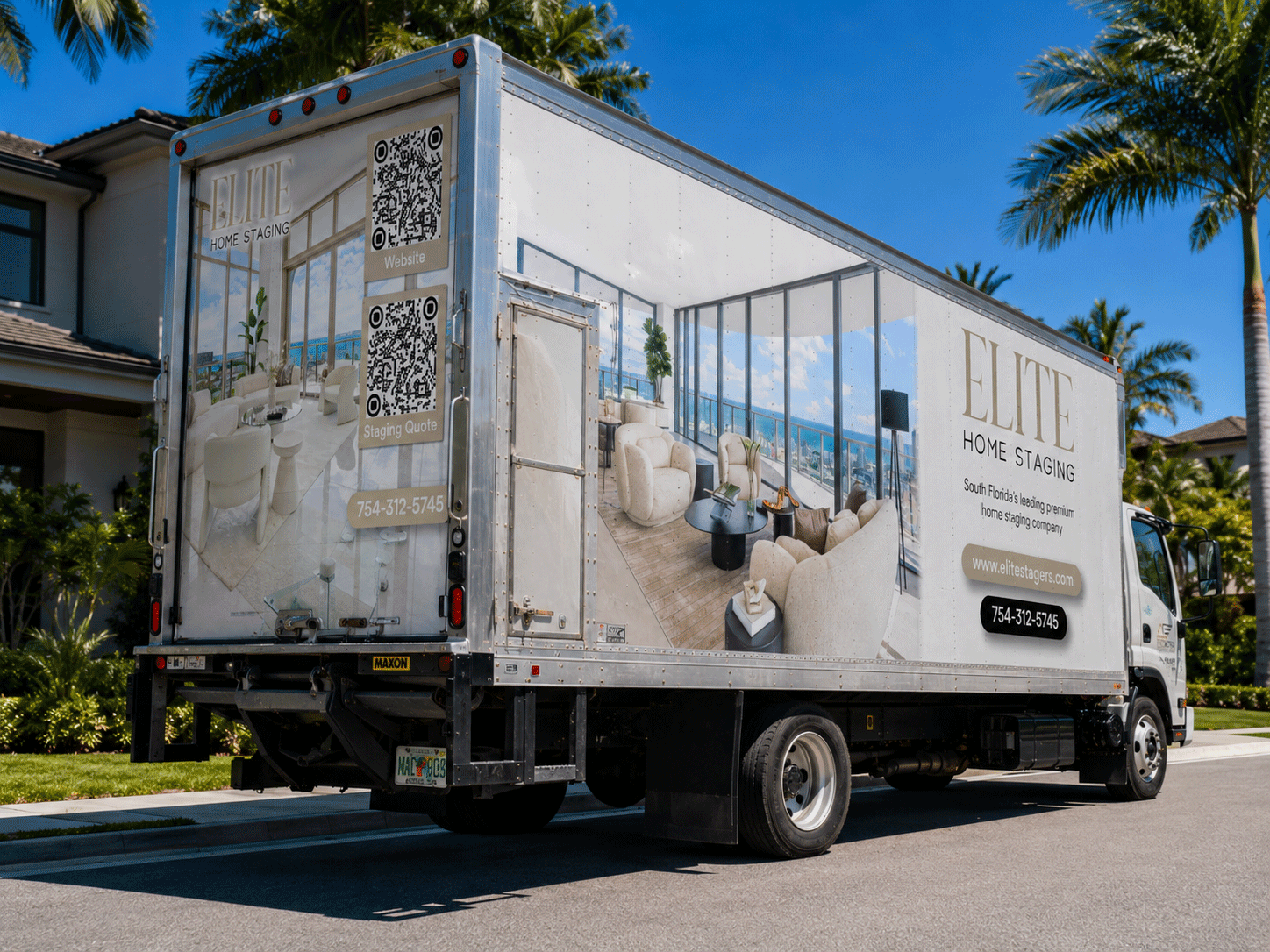
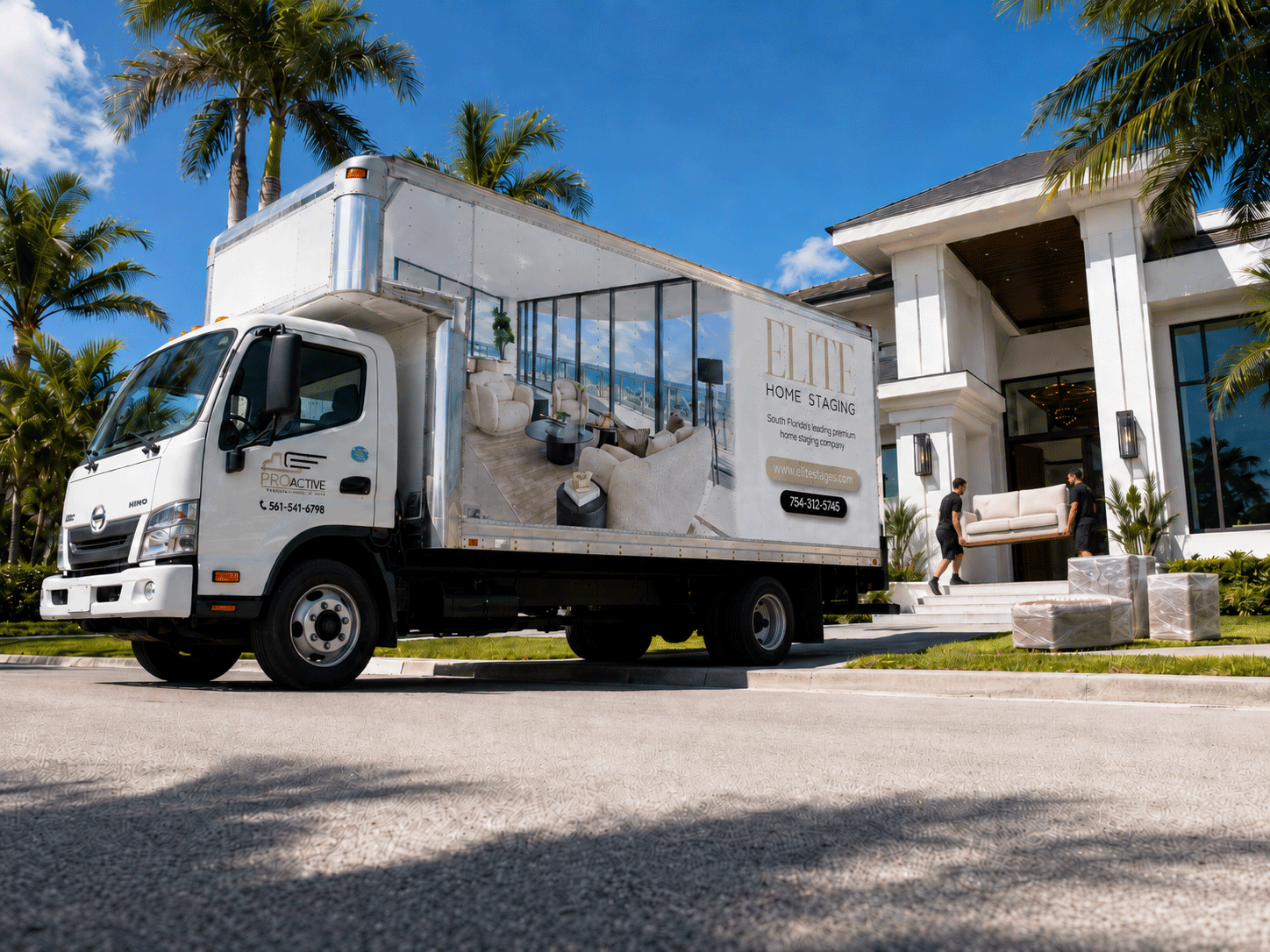
Fleet branding created a further attribution question.
Someone could scan a QR code on a vehicle, leave the website and return later. We implemented source recognition so the original campaign could still be associated with a subsequent visit where that tracking remained available.
This gave the fleet a role in measurable enquiry generation alongside awareness.
The design itself reflected how the vehicles would be seen. Strong photography and the identity worked across the sides, while the rear prioritised information drivers could absorb in traffic.
Realistic mock-ups helped the team assess the designs before production.
Stage 6: Giving sales and marketing practical materials
The identity and positioning were carried into a ten-page Your Staging Partner brochure.
It brought the offer, process, audience relevance and evidence into a format the team could use with prospects and partners.
We also developed flyers, campaign layouts, social assets and presentation structures.
The aim was to give the people representing EHS tools that expressed the agreed direction consistently, with enough flexibility for their particular purpose.
Stage 7: Establishing a repeatable content process
Employees, stylists and social support were already capable of capturing useful material. They needed a shared process for bringing it into the brand.
We established how content should be created, submitted, checked, published, tagged and reshared.
Team members captured projects using agreed guidance and supplied the relevant property information. An internal contact coordinated submissions before the social team edited and scheduled the material.
EHS published first, followed by employee resharing under the agreed rules.
The Brand Protection & Social Media Policy documented responsibilities, approval and correction processes, content use and confidentiality guidance.
Supporting materials included a one-page reference sheet, rollout and reminder emails, caption templates and tagging instructions.
Video guidance covered vertical filming, clips under 60 seconds, angles, lighting and audio. These practical details helped contributors supply material the social team could use while protecting the quality of the brand.
Stage 7: Connecting delivery, reviews and follow-up
We developed three branded Constant Contact templates around existing customer moments.
Photo delivery provided a consistent way to send the completed market-ready images.
Review requests made it easier to ask satisfied clients for Google feedback.
Realtor and social tagging helped confirm the details required before publishing a project.
We also mapped automation opportunities across contact segmentation, photo delivery, review requests and repeat-client communication.
This connected reputation building and customer communication with the wider brand experience.
Stage 7: Search and continued marketing support
Following launch, the relationship developed into fractional brand and marketing support.
We worked across the website, content, sales materials, tracking and growth activity, coordinating with the people and partners involved.
Paid search connected high-intent queries with relevant messaging, landing pages and enquiry routes. Campaign structure, keyword choices, geographic priorities and conversion measurement were considered together.
Google Ads launched on 5 February 2026 with agreed targets for traffic quality, conversion and lead efficiency.
Initial campaign reporting recorded click-through rates at approximately three times the industry benchmark used in the review, search impression share above 80% and conversion rates around 6.2% to 6.3%.
These were campaign measures used to guide improvement, alongside the enquiries reaching the business.
The wider work included high-intent search content, audience-specific landing-page planning and ongoing website refinement.
Stage 8: Supporting internal ownership
As EHS developed its internal team, we supported the transition of brand and marketing responsibilities to its new hires.
The strategy, identity guidance, materials and established workflows provided a practical foundation for the handover.
The engagement therefore continued from defining the direction through implementation and improvement to helping the firm carry the work forward internally.
Connecting the brand with commercial progress
The new positioning needed to carry through the way customers discovered Elite Home Staging, understood its offer and decided to get in touch.
We connected the website, enquiry journeys, search activity and follow-up systems around that objective, giving the firm a stronger foundation for attracting and responding to opportunities.
A website built around how customers decide
We created distinct journeys for realtors, investors, developers and homeowners. Each brought together relevant services, supporting evidence and a clear route to request a quote.
The content explained the commercial value of staging and made the firm’s wider capabilities easier to understand. Customers could find information relevant to their property, recognise the experience behind the offer and approach the team with greater confidence.
Quote requests passed into the CRM, connecting the website with the sales process and giving the team a more consistent starting point for follow-up.
Stronger enquiry performance before advertising
The initial reporting showed a higher average weekly enquiry rate following the website launch, before paid advertising began. Google also accounted for a greater share of enquiries.
That improvement provided a stronger foundation for further marketing activity. The clearer positioning, service explanations and audience journeys gave prospective customers more useful information before contacting the firm.
The reporting covered different periods, so it was used to assess direction and guide further work rather than attribute every improvement to a single change.
Connecting search demand with the right experience
With the website and measurement foundations established, we developed and managed Google Ads campaigns to reach people actively looking for staging services.
The work connected relevant searches with advertising messages, website content and clear enquiry routes. Each part needed to reinforce the same proposition and help prospective customers understand why EHS was worth considering.
Conversion tracking provided visibility over the actions recorded through advertising. Ongoing reviews informed changes to campaign relevance and the experience people encountered after clicking.
Continued support beyond launch
Our role continued through fractional brand and marketing support, connecting website improvements, paid search, SEO, content, sales materials and performance reporting.
The website, enquiry handling and campaign measurement gave the team a clearer view of how marketing activity connected with incoming opportunities. Brand guidance and creative oversight helped maintain consistency as new materials and campaigns were introduced.
We subsequently supported the handover to EHS’s internal hires, helping them take the brand and marketing work forward.
What the work enabled
EHS gained a clearer position and a connected brand experience that communicated more of the firm’s capabilities and value.
The website helped different audiences understand the offer and take the next step. Search activity supported discovery, while connected enquiry handling and reporting gave the team a more practical basis for follow-up and continued improvement.
Together, the work equipped EHS to present the business more convincingly and support its next stage of growth.
The completed work included:
- One clear position, promise, personality, identity and voice for the brand.
- Four website journeys built around the decisions made by realtors, investors, developers and homeowners.
- EHS's strongest evidence placed at the points where prospective clients are most likely to hesitate.
- Quote requests sent directly into the CRM, with general enquiries handled separately.
- Tracking across forms, calls, campaign links, Google Ads and offline QR codes.
- A documented process for capturing, approving, publishing and resharing content.
- Branded photo-delivery, review and tagging emails that support the customer experience.
- A consistent identity across the website, brochure, social content, email, fleet, advertising and internal guidance.
- An ongoing partnership focused on improving the brand and marketing over time.
Finally, we helped them transition the whole brand and marketing role to their internal hires for further growth, in which we assited on clear handovers.
CLIENT REVIEW
"I'm very happy with the branding work. Leads have at least doubled since the rebrand. You're amazing. I really love that you're in the industry, which helps tremendously.
"I worked with Kiki and his team for over a year and would highly recommend them. They changed my branding and elevated my company tremedously."
David Bowles, CEO, Elite Home Staging



The Live Site

Posi+ive Impact
The strategy made EHS's existing social, environmental and economic contribution more visible. This impact belongs to Elite Home Staging; 9 Designs' role was to identify it, organise it and communicate it consistently.
- Social impact — $100,000+. EHS has supported the Broward Homeless Initiative with more than $100,000 in contributions, including a $10,000 event gift, alongside investment in a supportive, people-first employment culture.
- Environmental impact — $25,000+. The staging model naturally extends the life of furniture through repeated use. EHS has donated more than $25,000 in furnishings and has moved towards hybrid and electric vehicles within its fleet.
- Economic impact — South Florida. EHS supports the property ecosystem by helping listings become more market-ready, employing a local team and working with realtors, investors, developers, photographers, suppliers and community partners across the region.
The Community Impact page gives this work a permanent place within the brand rather than leaving it as an occasional corporate message.
more projects
find more impactful case studies below or to view our full project portfolio, click here.



.png)
.png)